Many factors decide to choose the right place for the camp, Above all, however, remember about safety. You will probably not be able to predict any potential threats and the inconvenience of a given place, However, you can protect yourself from a bad choice by looking for and putting on a bivouac, Before it starts to go. Never regret time for a careful reconnaissance. Planning your day, counting backwards, from an hour, when it falls dark. At least an hour before dusk, the tent or hut should already stand in place, And the food is heated on the fire. You need to spend an hour to break up the camping and more or less the same for reconnaissance and search for the right place. So if it starts to go about six, You should think about the bivouac at the third one, And at the fourth, finish the journey and start looking for a place for the camp.
Practical tips
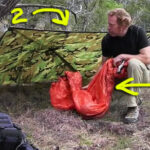
■ Podczas deszczowej pogody wykop wokół namiotu rowek odprowadzający wodę, protecting against flooding the tent. With the gusty wind, the ends of the tent tent are overwhelmed with heavy stones.
■ Przedmioty, which you do not use, Keep packed. Then you will always know, where can you find something, and in case of threat to evacuate quickly.
■ Nigdy nie trzymaj jedzenia wewnątrz namiotu. Hang a bag with food about three meters above the ground and about one meter from the tree trunk. Then animals, such as bears or monkeys will not be able to reach it.
■ Rozpakuj plecak, Repair clothes and equipment, Before packing again, ventilate all things, including a sleeping bag, and dry in the sun.
Drying shoes
Shoes dry. You will protect them in this way against crawling insects and other animals, which could look for shelter in them.
Perfect place
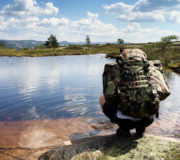
This is a place located near the water, but not threatened with flood; in the shield of groves, but away from dry trees, which could blame themselves by destroying a hut or tent. When choosing them, pay attention, Is there no traces of the presence of dangerous animals nearby. Best, when it is located in the valley, But not at its bottom and in a place sheltered from the winds.
Wind direction
You must try to determine, where in a given place the wind often blows and break the tent yes, so that he would not be returned by entering this direction. The latrine should be dug on the leeward side of the tent. A place for a bonfire should be placed like this, so that the smoke would not fly constantly towards the tent.
Trees
Camping near the groves has its benefits, even because of the abundance of wood for fuel or building material.
However, you should pay attention to dry trees or individual branches, which may fall on the tent. Trees can also be a shelter of dangerous animals.
The breakthrough of the river
If the river creates a bend, it is better not to break down on its inside, because the shore there is usually lower and can be flooded. Also from this side, In the place where the river flows slower, settlements from the gravel applied, which may cause congestion and cause a flood.
Drawing water
Always get drinking water from the stream above the camp, as well as above the place, where they drink animals.
Washing clothes
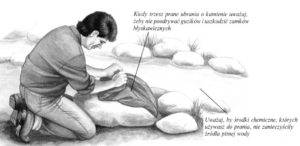
Do it in the bottom of the stream, Below the tent and places, where you wash the dishes and draw drinking water. First, wet the dirty clothes, then rub them on the ground with soap. Rinse in water on the bucket, and not directly in the stream.
Tent
Break the tent at such a distance from the stream or river, so that the sound of water would not drown out other sounds, For example, approaching animals. Set it like this, that the entrance is sheltered from the wind and does not go out to the latrins.
Latryna
Trench the latrine on the leeward side of the tent, below the place, where you draw water and wash the dishes. Check, Is it far enough from the stream, that it will not cause water pollution.
Campfire
Smoke from the fire scares insects. However, if you light them too close to the tent, He can deal with fire from shining sparks and flames.
When choosing a place for camping, avoid wetlands and such, over which the masses of cold air accumulate. Try to imagine air circulation in a given area and a possible water flow path after heavy rain or melting snow.