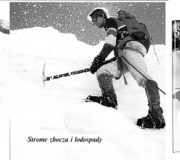
Clothing for unusual conditions
Clothes for hot weather
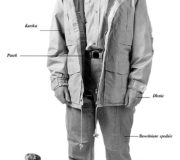
Clothes for hot weather must be light and quite loose. They should also have bright colors, which reflect sunlight and better protect against overheating. The principle of dressing on the onion also works under these conditions.
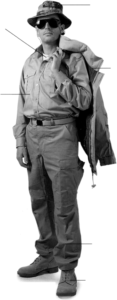 First layer
A light -color T -shirt in a light color put on the bare body absorbs sweat and is a breathable.
Second layer
A light shirt in a hot climate is an outer layer.
In case it is extremely hot, For example, in the desert, The sleeves should be abandoned.
Headgear
A wide -brimmed hat protects the head and neck from the sun. The holes around the hat provide ventilation and protect against overheating of the head.
Outer layer
The lightweight windbreaker put on the shirt is outerwear. Protects against wind and night cold.
Pants
Pants cannot restrict movement; They should be made of light breathable fabric like cotton.
Shoes
Light, but with hard soles, so that they are suitable for long marches.
Drink clothes
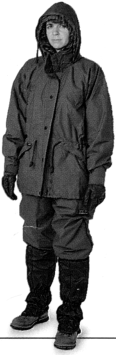 Missing in the field can have very serious consequences. A waterproof coat or overalls and other clothes that protect against rain should be put on, as soon as it starts to rain and take off immediately, when it stops. Impregnated covers are not the best football outfit, Because they sweat quickly in them.
Instead, you should choose these fabrics, which "breathe". Ortalion pants should only be put on, when it is pouring and at the same time it is cold. Thanks to the orthalion protectors, you will avoid wetting the feet and calves, Even if you have to wade in a stream.
Outfit
Waterproof clothes should cover the whole body from head to toe.
If you follow the onion principle, You should not have problems with completing the outfit needed in all conditions. When choosing a field, you don't have to have clothes for specific climatic conditions. By putting on several layers of clothing and using the right shelters and the warmth of the outbreaks, you should manage in almost every situation. Wind, Cold, heat, Sun and rain are the main threats, which the right outfit should protect us from. Some clothing elements adapted to be worn in particularly extreme conditions, For example, shoes for walking on the jungle, may prove to be completely useless in normal terrain. However, most types of clothes can be used according to your needs.
Cold clothes
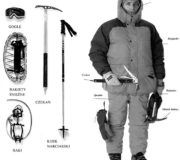
Staying at very low temperatures, all parts of the body must be sheltered, and the whole outfit should consist of several layers. Be prepared, for the need to remove one or several layers, or upper -ups of the outer clothes, When the body warms up. Wetting layers of clothing loses insulating properties from sweat, which at a low air temperature threatens to cool down.
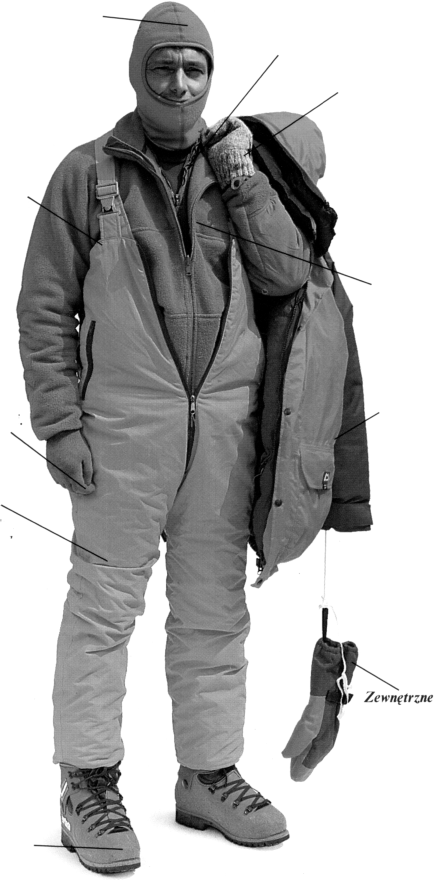 Headgear
The balaclava not only covers the head, but also cheeks, ears and neck, thanks to which you do not lose heat through these usually exposed parts of the body. You can wear a cap under the balaclava, which additionally protects against cold.
First layer
It consists of a warm T -shirt and pants. They should be sewn from fabric, which absorbs sweat.
Second layer
Sweatshirt or shirt with a polo collar should cover the neck yes, so that you can hide the bottom of the balaclava under it. Her sleeves must be long enough, to get on the gloves.
Third layer
Polar sweatshirt should absorb sweat from the inner layers and keep a layer of warm air underneath.
Internal gloves
Five -fed, They protect the skin against burns when touching various objects and metal tools in the cold
Pants
Fixed on the braces reach for the waist, protecting the back and front from the cold. They have a zipper. You can wear only insulated pants, or put them on pants or pants.
Middle gloves
Wool gloves with one finger, worn for external gloves, and for gloves with five fingers, they still allow you to grab items, while protecting your hands from frostbite.
Outer layer
A hooded insulated suit is an essential element of the outfit for cold. Should have a zip tab with an additional button fastener. On the top, it is best if it was made of synthetic material, like Goretex.
Shoes
Ice and snow shoes, those that mountaineers use, for example, consist of a plastic outer shell and insulated bottle inside. The shoe must be big enough, that the foot will enter him in two socks.
Outer gloves
The principle of onions is also used for gloves. The outer gloves are the third protective layer, put on thicker wool gloves.