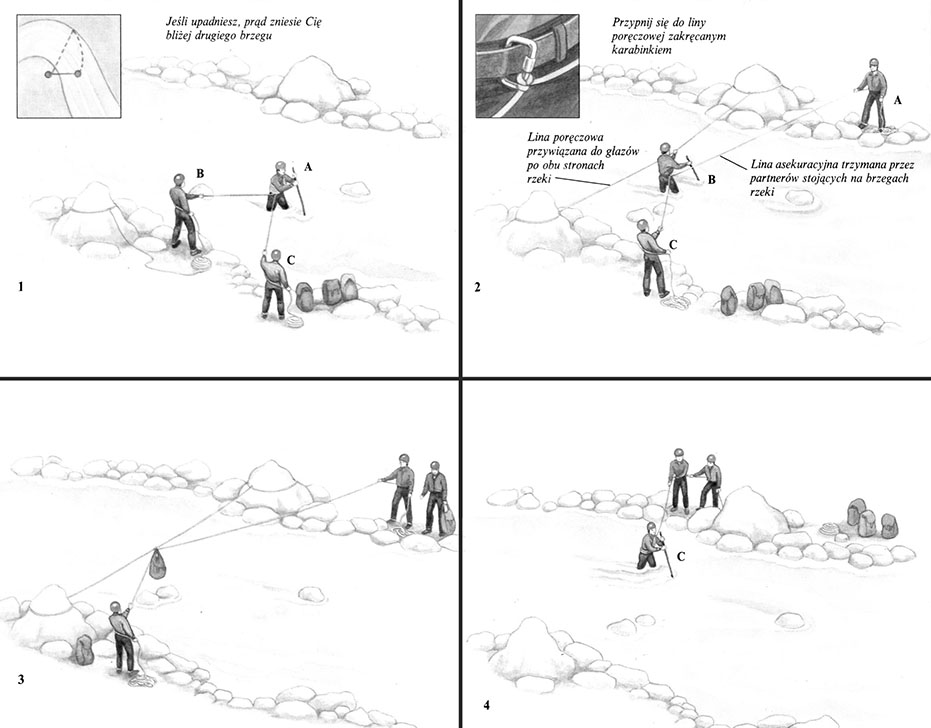
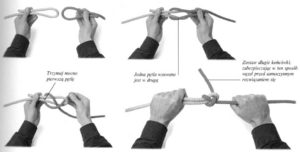
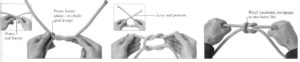
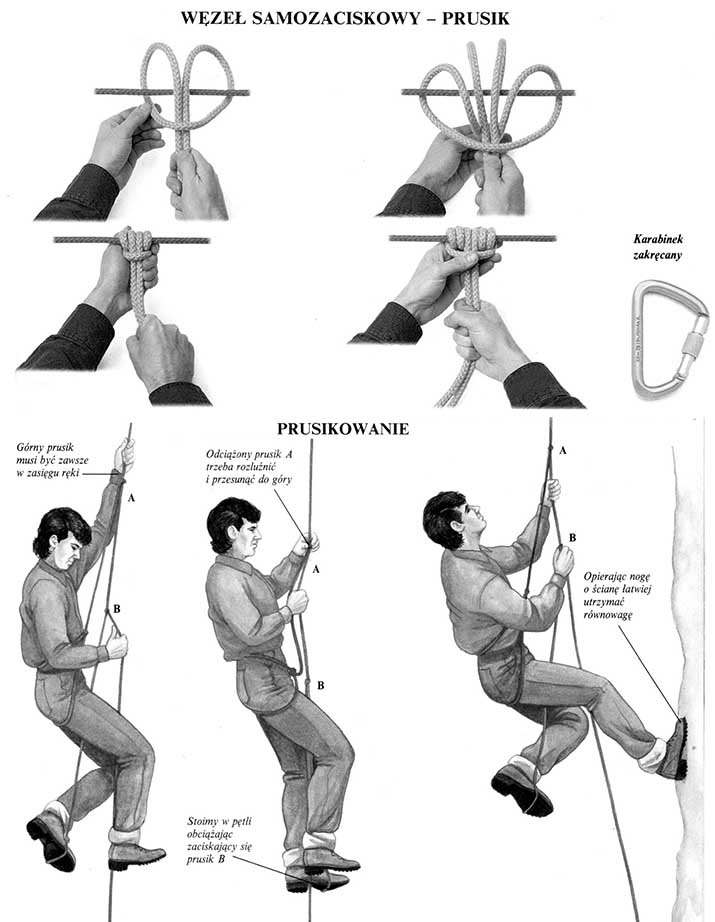
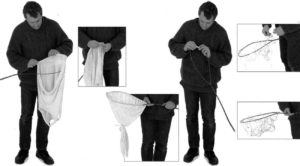
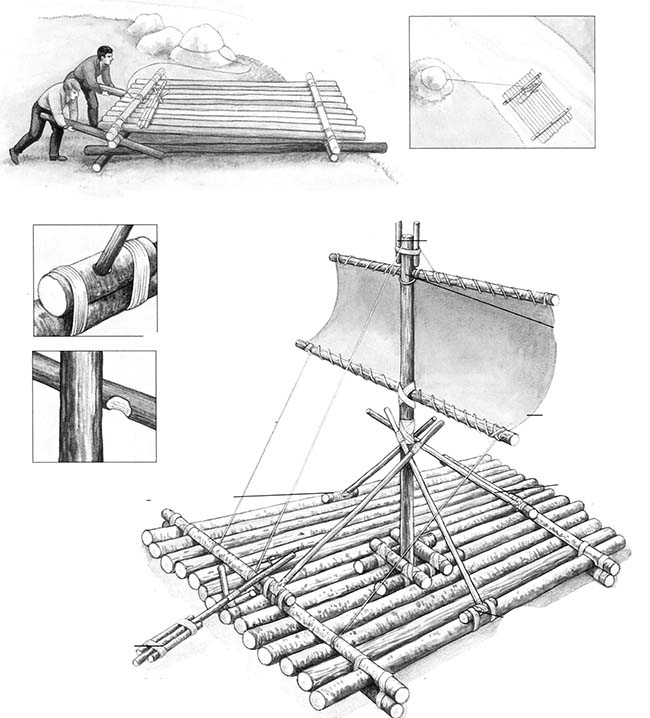
A piece of rope or string will be useful when making any makeshift elements of equipment in the field – preparing wooden sleighs, or sticking different materials together. If we do not have a standard rope or cord, They can be splashed with natural materials. However, the appropriate nodes should be used, to keep safety, For example, others requires a rope, which we insure the crossing through the river, and others, when we want to combine permanently and probably various elements of hand -made inventory. If you can't remember more nodes, Learn to tie a flat node.
Types of ropes
There is a distinction between two basic types of ropes, Due to their weave. Ropes and cords consisting of three twisted veins and spinal ropes, in which the core veins are surrounded by a braided braid (shirt). Both types of ropes can be made of natural or synthetic fibers. Choosing a type of rope, This should be taken into account, what it is supposed to do for us. The braided rope twisted less and loopes than a regular twisted string. Ropes made of natural fibers can rot, When the moist natural fibers remain longer, they also show less strength than synthetic, such as nylon or polyester. Konopna rope, for example, is quite easy.
String of twisted fibers
This type of rope is often stronger than the spinal rope, but also less resistant to damage. Consists of three fibers twisted together. Generally made of natural fibers, such as sizal, hemp or synthetic, For example, nylon. Such lines are often used as a cum on boats and ships; They have high static strength.
Core
Climbers use spinal lines for belaying due to their high dynamic strength. The core of such a rope is intertwined together, thin twisted veins. They are covered with a braided braid, also called a T -shirt. Such a rope is flexible and easy to use, Although the caught or wet can be difficult and sneaked out of the hands.