Plant collection for preparing a meal is not limited to finding various plants, which seem edible to us. You always need to find a lot of plants of one species, to be able to prepare the right portion from them, which you will eat. It is better to collect plants only a few species, Because this reduces the likelihood of incorporating accidental poison in a meal. When collecting plants, remember to leave some of them, so that the species can regenerate. Crumpled plants break down very quickly, So try to collect them in a box, bag or other container.
Root digging
Many plants store starch in the roots, which allows them to survive winter. In spring, starch is converted into sugar, which nourishes young shoots. Therefore, the most values have roots collected in the fall, The spring is sweeter. However, if you collect roots in spring – be careful. Many plants have not yet released shoots and leaves, So you may have trouble recognizing species.
Root preparation
The roots should be prepared and cooked as soon as they are collected, so that they do not break. They have to be thoroughly cleaned, but don't peel the skin, because the skin contains valuable vitamins. Cut the roots into pieces and cook in water. Cooking removes the bitterness contained in some roots. Cook them until tender, You can easily stick a fork into them.
Flour grinding
Most seeds cannot be digested well, until it grows on the flour. Such a product can be added to stewed dishes, or mix with water and make a cake. Flour can also be obtained from many nuts, as well as from the roots and faded flowers.
1 Zbierz ziarno nachylając kłosy traw nad woreczkiem. Shake the ears or crush the ear with your hand. Spread the seeds in the sun, To make them dry.
2 Oddziel plewy od ziarna podrzucając w pojemniku. Chaff are lighter, Therefore, a gust of air lifts them from the container.
3 Rozetrzyj ziarna na mąkę między dwoma kamieniami. The bottom should be large, flat, with a cavity in the middle. The second stone will be evenly, circular movement.
 Many plants store starch in the roots, which allows them to survive winter. In spring, starch is converted into sugar, which nourishes young shoots. Therefore, the most values have roots collected in the fall, The spring is sweeter. However, if you collect roots in spring – be careful. Many plants have not yet released shoots and leaves, So you may have trouble recognizing species.
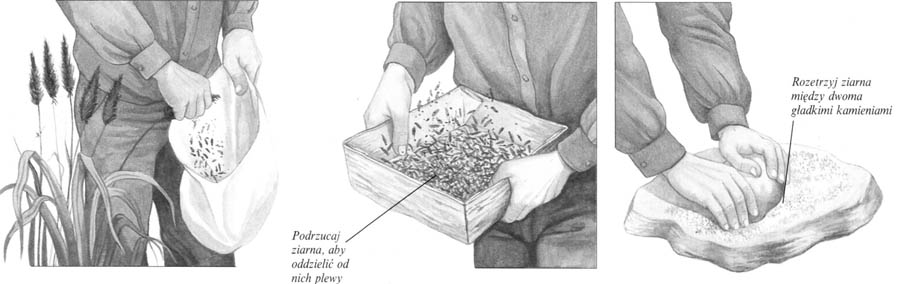 Most seeds cannot be digested well, until it grows on the flour. Such a product can be added to stewed dishes, or mix with water and make a cake. Flour can also be obtained from many nuts, as well as from the roots and faded flowers.



.jpg "Edible and poisonous fruits")