Fuel.
Soft ash, apple tree, hazel, ostrokrzew, Fir burn quickly, a large light flame, which gives a lot of heat. From the fire, to which such wood was placed, However, the skier's sheafs are falling apart, what can be dangerous. The most sparks shoot when burning the Cedar and the Canadian spruce. Soft wood is burning quickly, Therefore, it is used to maintain the dimming and cooking quickly, For example, tea water. This fuel burns quickly, leaving a lot of ash, instead, So it is not suitable for baking or slow cooking.
Cooking fuel.
Hard oak wood, open, maple, peanut, birch or sycamore burns slowly, equal, a calm flame, giving a lot of heat. After burning such wood, charcoal remains, which is perfect for heating dishes and stewing on a slow fire. The smell of smoke affects the taste of hot foods, floating from the fire. Different wood species secrete other fragrances during combustion. For example, the pine gives the dishes a resin flavor, And appleness and sycamore are enriched with their aroma.
Foster fuel.
Sometimes it can happen, that you need to light a bonfire in the area without trees. Then, as a fuel, you can use dried animal droppings, moss, lichen, heather, and even peat briquettes. However, all this must be dried in the sun before laying the fire.
On the sea shore you can light a bonfire from dry seaweed. Sometimes there are pieces of coal, and in oil areas it happens, that crude oil is filled with the surface. Animal fat can also be a substitute fuel.
What wood is better not to add to the fire?
Campfire, to which we will add wood soaked in resin, He begins to sizzle strongly and dangerously shoot sparks. If possible, Avoid this type of fuel. Resin wood, among others, pine and blackthorn; and wood from alder, chestnut, poplars or willow rather smolders, than smoke. Bamboo is suitable for opal, If we split his stalks. Otherwise, under the influence of hot, it can shoot.
Firing fire
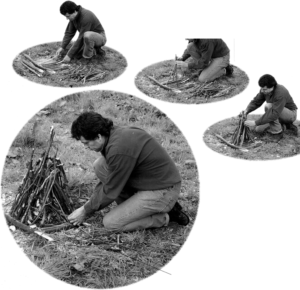
If you want to light a bonfire. You should start with small twigs and splinters. When the flames embrace the bonfire, larger branches can be added, and then thick logs. It's best to divide the fuel into a hub immediately, Dry material for kind, Small branches and brushwood, thicker sticks and thick. Before we add thicker wood, previously founded fuel should light up well.
Armor
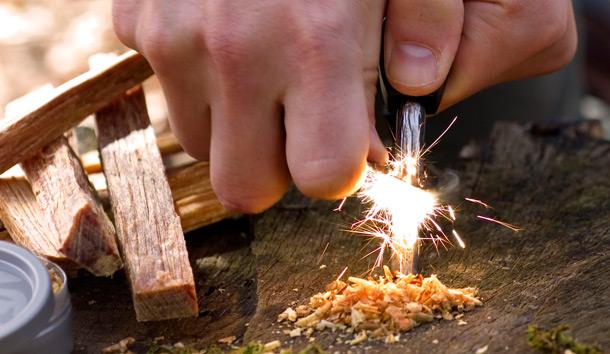
Laying a bonfire should start by pouring a small pile of dried, finely grated, dry material. Hubka is the most important part of the bonfire because without it you can't light a fire from a spark or even a match (unless you have a special device to light a bonfire in your inventory).
Fabric
As soon as Hubka takes care of the spark and begins to smolder, Add dry leaves, chips or small sticks. Bads for lighting should be more or less the pencil thickness.
Minor fuel
When the material for lighting the flames, The stick thickness should be added to the bonfire. If it takes them fire, means, that the bonfire has ignited.
Main fuel
They are thick branches and sticks; thicker than previously planted, but thin enough, so that they can be easily broken. These sticks are a basic type of fuel.
 Fuel.
Fuel.