 When collecting insects, you have to be guided by instinct and common sense. Remember – Do not eat bright insects,
scale, sick or fate. It is not allowed to collect species secreting odors, because they can be poisonous. To, that some invertebrates are animal food, it is not synonymous with their food by man. Be careful when collecting any invertebrates.
Just like feeding on other food, It's best to learn to distinguish a few certainly edible species and avoid the rest. If you are weakened, The body is even susceptible to small doses of poison.
Red beetles
Red and any bright insect color, such as beetles or snout, This is a sign for predators, that these insects are tasteless. Don't collect them. Even if their poison is not very strong, You can seriously – postpone.
Clams
Hundreds of mussels are armed with a sharp mustache, who throw away like a harpun and inject the poison into the victim's body. Sometimes even a prick can be fatal. It is dangerous to accidentally step on a mussel buried in the sand.
Red moths
Red coloration of the moth means its bad taste. Although some non -toxic insects imitate poisonous species with color, it is better not to collect any bright insects, to avoid making a mistake.
Axis
They are very aggressive, Their sting is very dangerous. Never try to eat OS. The sting in the face causes swelling, which can make breathing difficult, and even lead to suffocation.
Morskie Stułbiopławy
Stinging stools, Like Hydra, for example (Hydra), They occur in warm sea currents. Portuguese sailor (Physalia) has stinging tentacles with a length of even to 12 meters. Try to avoid these animals from afar. Avoid a jellyfish too, Some may stick a fiddle with poison into the skin.
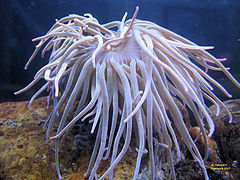
Cherry
They are sometimes found on the rocks of small bays. Most have stinging tentacles, Therefore, they should be avoided. Remember, that most animals obtaining food thanks to paddles can be harmful to humans.
Sea molluscs
In general, most molluscs are suitable for eating after cooking, but you can poison them. Sea molluscs feed on particles of food suspended in water, So many liters of water go through their body, and all poisons accumulate in their body. They should be collected alive and eat as soon as possible after collecting.
Other poisonous invertebrates
Earous caterpillar and polydies are inedible, because their hair may contain irritating, harmful substances acting on the skin. Yellow ladybugs are also poisonous (Coccinellidae). Most of the octopuses are suitable for food, However, watch out for the Australian Hapalochlaen octopus, which contains a strong poison that can kill a man. So if you can't distinguish between harmless species of octopus, Avoid everyone. Do not collect larvae buried in the ground or ants, which secrete formic acid. If you can't determine with certainty, what kind of species did you find – Leave him. This applies to all invertebrates.

.jpg "Edible and poisonous fruits")