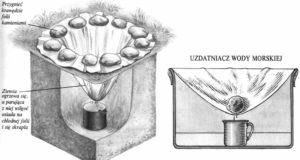
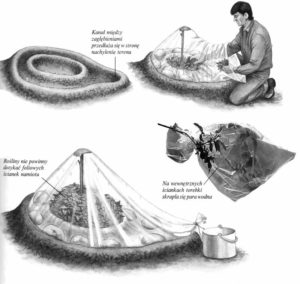
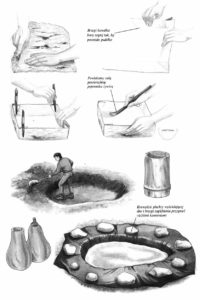
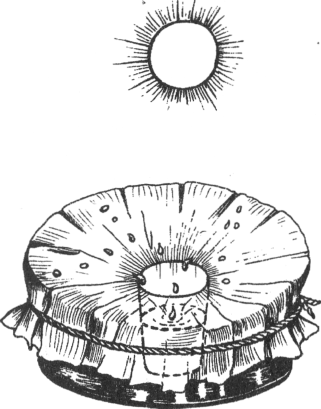
 Improvised solar distiller. In the middle of the dish, put a cup and place a piece of fabric around it. Fill the vessel in 1/3 sea water. Cover the dish with plastic foil, tie and expose. Sun rays will evaporate water and condensate the foil. The drops will drip into the cup.
Pouring distilled water from one dish to another or stirring firmly, We cause it to oxidize and improve its taste.
Swamp soil is a very good source of water. However, you need, that the mud stops well for half a day, Then cook them for a few minutes.
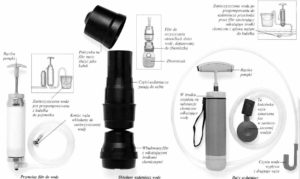
The best method is filtering. Into the container, in which the bottom there are small holes, Several layers are inserted (starting from below) gravel or smoothed pebbles, charcoal, sand or very fine caries and gravel again.
Another half -filter can be made of a height tripod 1 m with three pieces of canvas tied horizontally to the sticks. Gravel is laid on the upper canvas, on the middle – coal, And on the bottom – sand.
A very simple filter can be made of grass in the form of a cone.
Of course, The water must be boiled. Normal musty smell can be removed by adding some charcoal during cooking.
Being at sea, You can only count on providential rains, more reliable in the tropics, less common in other zones. A lot of juice is provided by caught fish. They should be cut into thin slices and chewing without swallowing. You can also squeeze water from fish between two rain.
It may seem a paradox, But it's easier to find water in the desert than at sea. Cactus juice is used in the desert, copies of wells (rather in a sedimentary area than rocky), Water is sought in narrow gaps, collects dew from stones and a few plants.
Willow, black without, cane, Water lilies like water and wet areas. You can dig a pit in their vicinity and collect the glitting water. We are looking for places in the grass area, in which vegetation is more shiny, Higher and more fleshy stems. Searching for water in such an area will certainly be successful.