Every day we rarely wear clothes suitable for natural conditions and climate, in which we live. In the city, we are guided primarily by fashion and this, Do we feel good in a given outfit. We live here as if in a cocoon of air -conditioned and heated rooms and vehicles. Even when buying clothes for outdoor movement,
We also succumb to current fashion orders, instead of thinking about the practical advantages of the outfit. You can spend a fortune on tourist clothes offered by expensive fashion houses or simply buy the most basic elements of the outfit, which will also do their job as well, Even if they are not in colors, which are just fashionable.
Onion principle
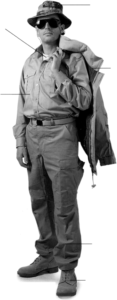
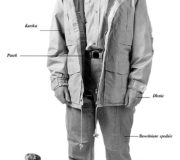
A few thin layers of clothing, between which there are air layers, provide better thermal insulation than one thick cover. Dressing on the onion allows you to remove the top layers, when you feel, that it is too hot or control body temperature by unbuttoning buttons or zippers, thanks to which the air is exchanged. The onion's principle works both in hot, as well as a cold climate.
First layer
Adheres directly to the body, Therefore, it should be cotton underwear. Up the best is a T -shirt or long -sleeved sweatshirt. Material, from which it is made, should absorb sweat, stopping moisture on the outside, that the skin stays dry. You should especially take care of the cleanliness of this layer of clothes, so that the side would not clog the skin pores, preventing her breathing.
Second layer
It should be quite loose, but so sewn, that the collar and cuffs ensure the maintenance of the neck and wrists in warmth. It can be a sweatshirt with a polo collar fastened with a zipper, or a regular shirt with a classic collar and cuffs fastened with buttons, which can be rolled up. In a hot climate it can be used as an outer layer. It is better then, however, to have an impregnated suit in case of rain.
Third layer
It should consist of a woolen sweater drawn through the head or thick, paddler (it could be so -called. polar). If you move quickly, This layer is best removed, Even in polar conditions, to avoid overheating. If you were still too hot, You can unbutton the suit of the suit. During rest, you should put on a sweater or sweatshirt. The third layer can act as outerwear in countries with a moderate climate, in typically autumn or spring weather.
Outer layer
The most suitable outer clothing is a suit or jacket. Musi ono być nieprzemakalne lub nieprzewiewne, or have both advantages at the same time. In polar conditions, a insulated suit is needed to ensure thermal insulation, as well as protection against penetrating winds. Regardless of the conditions, The suit must be sewn so, so that it can be unbuttoned, which will protect against overheating. In the moderate zone, rains cause the most trouble. You can protect yourself against them by taking a raincoat.
Kalesony
Long warm underpants are an essential element of clothing, Usually when the air temperature drops below zero. In polar conditions. However, remember, that wet pants dry faster, If we do not have underpants under them. In a moderate climate, pants can be replaced with cotton shorts up to half the thigh.
Pants
They must ensure freedom of movement and be made of material, which dries quickly. When it is very wet, The belt can rub the skin, that's why it's good to have braces. Ortalion pants put on top protect the legs from wetting, but they can cause overheating. At very low temperatures, put on pants – Pants with a insulation inspector and high shoes, as additional leg protection against cold.
Features of selected fabrics
Material
Advantages
Defects
Wool
Natural wool has excellent insulating properties, Even if it's wet, which allows you to keep the body warmth of the soaked man. In contact with fire, you smoke rather than smoke.
Wool, When it soaks water, it becomes heavy; You have to dry it for a long time. Worn directly on the body can irritate the skin. After washing, it shrinks.
Cotton
Is a durable fabric, It also allows you to breathe and absorbs sweat. It is perfect for underwear and other clothes put on a bare body.
Heavy after wetting, shrinks when it dries at a high temperature. Delicate, it is easy to tear it. Breathable, So it doesn't protect from the wind. It is easy to burn.
Polar
Perfect for the third layer, protecting the body from cold and moisture. Light and durable fabric. Does not absorb moisture.
Made of artificial plastic; does not protect against penetrating winds. It is difficult to squeeze it, So it takes up a lot of space in the backpack, The top of the fleece worn for a long time mechas and covers with compact buffers.
Synthetic fabrics, "Breathable’ (np. goretex)
These fabrics let sweat, And they stop rain. They usually also protect against the wind. Hence, they are great for the top 'clothing.
The seams in clothes from this type of fabric can pass water. In the case of very high humidity, the pores in the material can be clogged, And when it's cold, there is a condensation inside. The loss of heat evaporated in the form of sweat penetrating through the pores of the fabric can lead to hypothermia.
Selection of fabric
Tourist clothing is made of various fabrics – cotton wool, synthetic fibers. Some of the recently invented materials have this property, that although they are waterproof, they let in air. Materials obtained synthetically, however, are usually not as durable as natural, Besides, they can behave the smell of the body, even after washing. While natural fabrics, such as wool or cotton shrink after washing, especially when they are dried at high temperature.